Leg prostheses
At Protec, we fit your prosthesis using Direct Socket, which allows you to walk out the door with a new prosthetic leg that fits you perfectly within four hours. Getting help quickly and receiving personal attention are essential to us, so that you can walk as comfortably as possible. We are ready to guide you toward a pain-free and energy-efficient way of walking.
A prosthesis, tailored to you
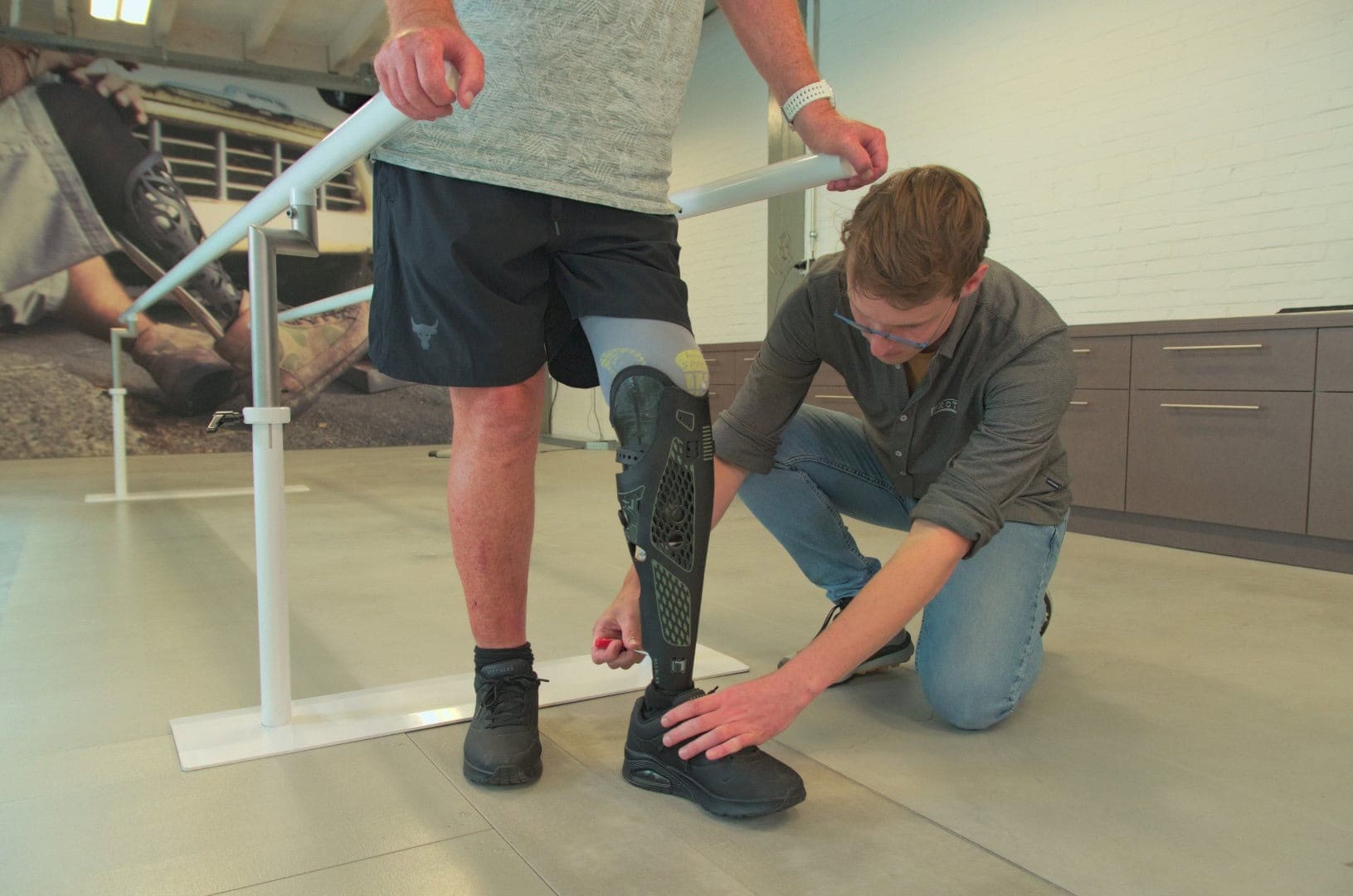
In a personal conversation, we will review your situation. What does your life look like and what would you like to be able to do with the prosthetic leg? We will work together to find the most suitable prosthesis. We provide prosthetic legs in various types and sizes, from mechanical systems to electronic knees, such as the C-leg and the Rheo knee.
A leg prosthesis from Protec
Everything you need, in one place
Fitting a leg prosthesis
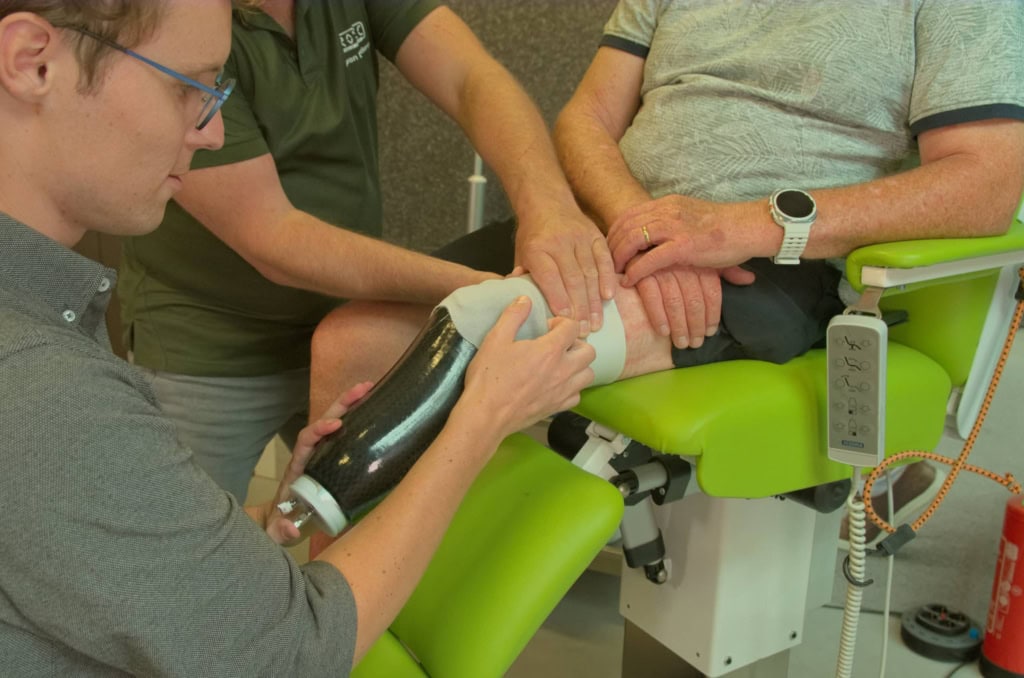
We fit your prosthesis using Direct Socket, whereby the prosthetic socket is directly molded to your residual limb. Thanks to this innovative fitting method, the prosthesis fits perfectly around your stump and you’ll have a new prosthesis within a few hours.
Gait analysis
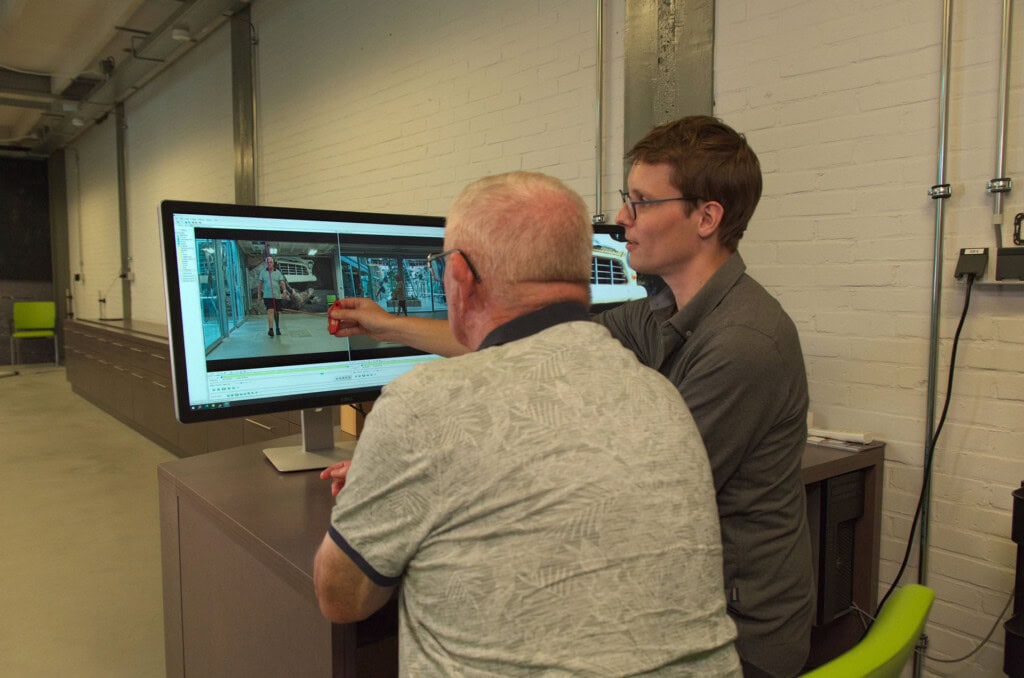
In our gait lab, we analyze your walking pattern. We do this by using a force plate and video footage. This allows us to see if any adjustments are needed to the prosthesis and provide you with advice on how to improve your walking pattern.
Movement training
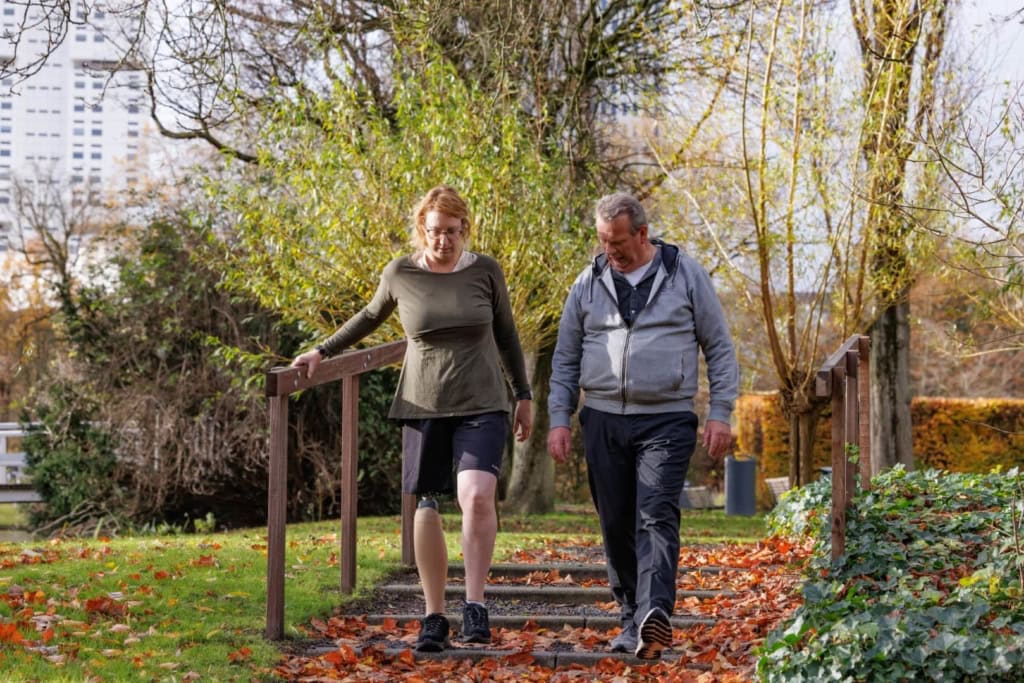
We believe it’s important that you can walk with full confidence and get the most out of your prosthesis. Our movement coach provides movement advice and walking training. He has been training prosthesis users in walking with their daily prostheses for many years.
Aftercare
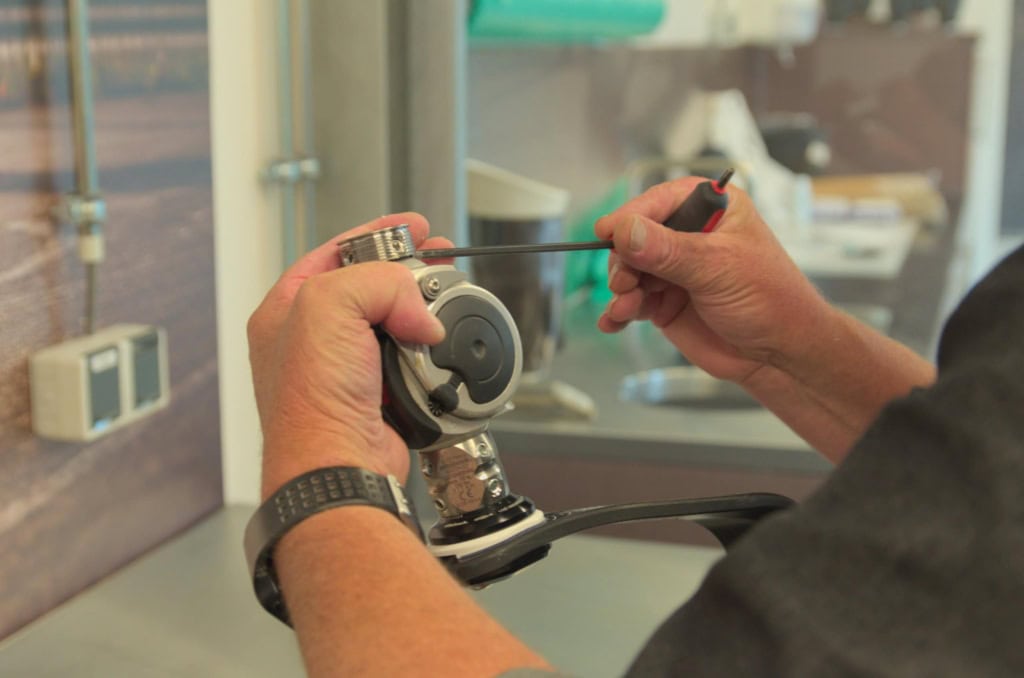
Our service doesn’t stop after the delivery of the prosthesis. We are happy to resolve any issues with your prosthesis as quickly as possible so that you can continue to do the things you do every day.
Maintenance
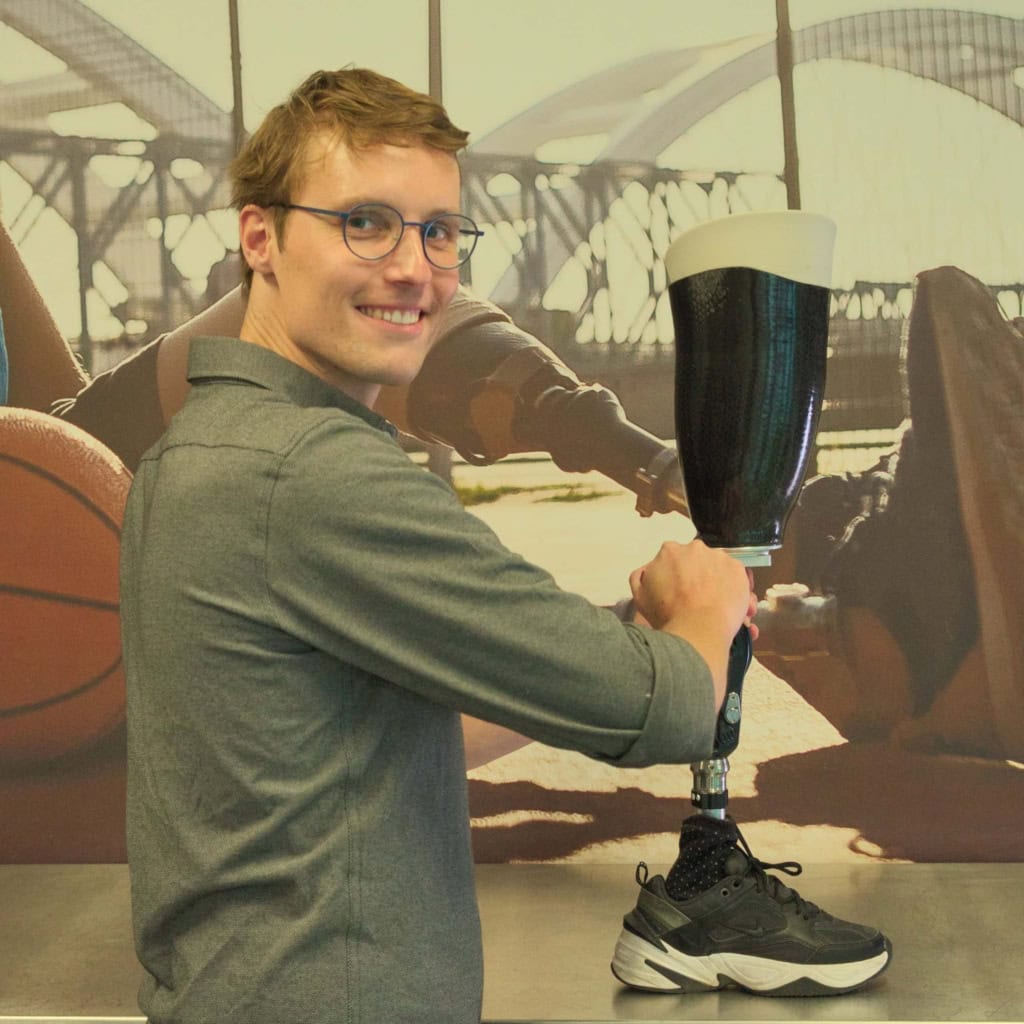
Of course, you want to prevent unpleasant smells and infections on your residual limb skin. Proper maintenance of your prostheses, liners and stump socks is therefore important.
Sports with a prosthesis
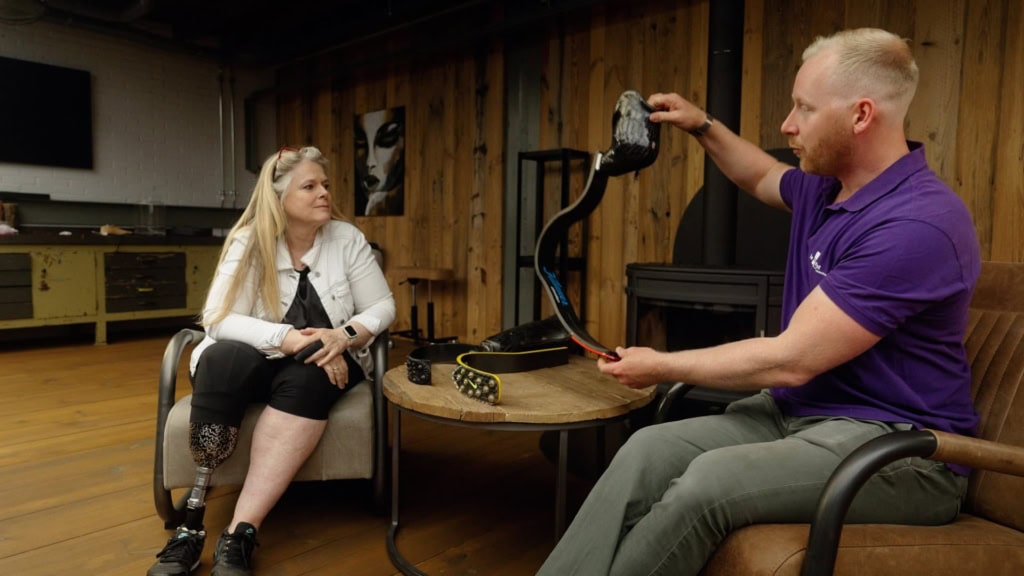
We understand that you want to stay active. We are happy to work with you on this. We provide sports prostheses for various sports and you can rent sport blades from us.
Types of leg prostheses
Below-knee prosthesis
A below-knee prosthesis is suitable in cases of an amputation or limb deficiency below the knee. This type of prosthesis usually consists of a socket, a pylon and a prosthetic foot. Because the knee joint is preserved, a below-knee prosthesis often allows you to relearn a natural walking pattern. The exact configuration of the prosthesis is tailored to your daily activities, mobility and personal preferences.
Above-knee prosthesis
In the case of an amputation or limb deficiency above the knee, this is referred to as an above-knee prosthesis. In addition to a socket, pylon and prosthetic foot, an above-knee prosthesis also includes a prosthetic knee joint. This knee can be mechanical or electronic. The choice of prosthetic knee depends on factors such as your level of mobility, stability, daily activities and physical capabilities.
In all cases, the socket for your below-knee or above-knee prosthesis is made fully custom-made, ensuring a comfortable and secure fit. Which leg prosthesis suits you best will be discussed together during a personal consultation.
Reimbursement of your prosthetic leg
We have contracts with all health insurance providers. A prosthetic leg is reimbursed through the basic insurance. However, some types of prostheses, such as a sports prosthesis, are not covered under the standard reimbursement. In these cases, we can explore alternative ways to get it reimbursed. We are happy to discuss the possibilities with you.
Frequently asked questions about leg prostheses
What types of lower limb prostheses are available?
There are many different types of lower limb prostheses. A prosthesis consists of multiple components, all selected based on your personal situation. Each prosthesis is custom-designed and made to fit your needs.
Because of this, it is difficult to classify prostheses into fixed categories, but you can think of differences such as:
- Level of amputation: including below-knee, above-knee, and hip prostheses
- Technology: such as mechanical or electronic knees for above-knee prostheses
- Systems: including liners, locking systems with liners, and vacuum systems
- Fitting methods: either through a plaster cast or the Direct Socket method
- Activity level: components are selected based on how active you are
- Finishing options: ranging from functional to cosmetic (silicone, foam, prosthetic covers, or 3D-printed designs)
There are also specific types, such as osseointegration prostheses, rotationplasty prostheses, and lengthening prostheses. The best solution for you is determined together based on your situation.
How is the right prosthesis determined for me?
Together with a rehabilitation physician, physical therapist, and prosthetist, we assess your situation, goals, and needs. Based on this, we recommend the most suitable prosthetic solution.
How does the fitting process work?
We use the Direct Socket method. A liner and multiple layers of material are applied to your residual limb, after which resin is injected and quickly hardens. Creating the socket takes about an hour, followed by assembling and adjusting the prosthesis. In many cases, you can go home the same day with your new prosthesis.
Go to this page to read more and see the video about the Direct Socket method.
How long does it take to receive my leg prosthesis?
With the Direct Socket method, you can often use your prosthesis within half a day.
Does wearing a leg prosthesis hurt?
We aim to create a prosthesis that allows you to walk comfortably and without pain. However, pain perception varies from person to person. After an amputation, your residual limb may be sensitive at first, as the tissues need time to adjust to the new pressure. This discomfort often decreases over time, allowing you to wear the prosthesis for longer periods. In some cases, no pain is experienced at all.
What activities can I do with a leg prosthesis?
In most cases, you can return to many of your daily activities, such as walking, cycling, or sports. Sometimes this may be in an adapted form or at a different level. Together with your care team, we determine what is achievable in your situation.
What does rehabilitation look like after receiving a leg prosthesis?
During rehabilitation, you are supported by a multidisciplinary team. The physical therapist helps you learn to walk and build strength and endurance. The occupational therapist assists with daily activities. The prosthetist monitors and adjusts the technical aspects of the prosthesis. Your rehabilitation physician oversees your health and progress.
How much does a leg prosthesis weigh?
A lower limb prosthesis typically weighs between 1.5 and 3 kilograms.
How long does a leg prosthesis last?
A prosthesis can last for several years. Replacement is often needed due to changes in your body, which can affect the fit. We first try to adjust the existing socket. If that is no longer possible, a new one will be made. We also monitor wear and tear of components and replace them when necessary.
Is a leg prosthesis covered by insurance?
A prosthesis is generally covered under basic health insurance. For specific or additional requirements, a special request may sometimes be needed.
How do I maintain my leg prosthesis?
Proper maintenance is important. Keep the socket, liner, and stump sock clean to prevent odors and infections. For detailed instructions, please refer to our prosthetics and orthotics maintenance page.
We are only happy, when you are
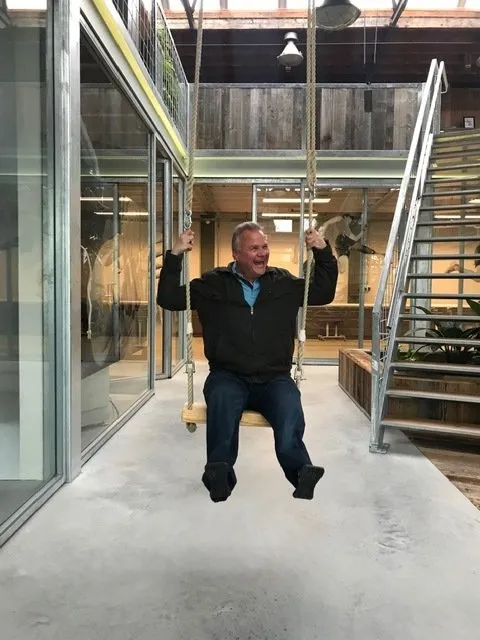
"Mr. Bakels wears two upper leg prostheses. He had two internal knee prostheses that were rejected by his body, requiring the amputation of both his legs. The doctor who treated him told him that at his age he would never be able to learn to walk again with prosthetic legs."
Read Rob's story
"Our son Lucas has been wearing the Talee helmet for over two months now, and so far, the experience has been amazing! Lucas loves seeing his orthotist every time we have a check-up. We would definitely recommend this helmet to any parent who is about to start using a correction helmet for their child."
Read Lucas's story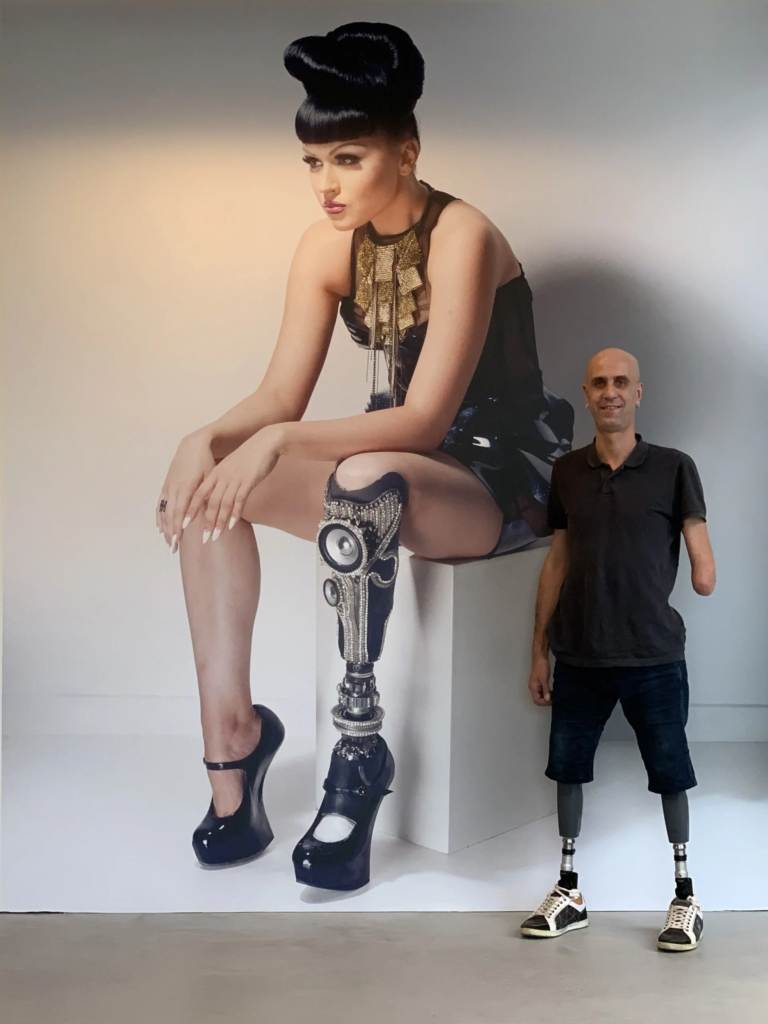
"It was truly amazing! After eight years of struggle, a whole new world opened up for me. First of all, two prosthetists dedicated four hours to me. The director even locked the front door, and the three of us had the entire place to ourselves. Complete attention, where do you still find that? By the end of the morning, I was walking freely on two trial prostheses. I had a smile from ear to ear. I could walk again! And that after eight years of problems with my sockets."
Read Robin's story